SCC Report: Disputes involving Baltic parties in cases administered by the SCC (2015–2025)
Author: Jake Lowther1
Table of contents
Executive summary
The Baltic states, Estonia, Latvia, and Lithuania, are an increasingly important source of cases for the SCC Arbitration Institute (“SCC”) and for Stockholm as a seat of international arbitration. As Ramūnas Audzevičius, Partner at Motieka & Audzevičius and a member of the SCC Board, has observed2:
In Lithuania I can declare SCC is the champion. Brand awareness in Lithuania is very high. SCC brand equity is very strong. Trust in Stockholm as a seat is perfect. I wouldn’t say there is a competitor to SCC in the Baltics, throughout the Baltics, and especially Lithuania.
This report (“Report”) examines 80 cases administered by the SCC between 2015 and 2025 involving at least one party from Estonia, Latvia or Lithuania.3 Its purpose is twofold: first, to present empirical data on the characteristics of these cases and situate them within the broader Swedish-Baltic commercial and bilateral relationship; and second, to illustrate why SCC arbitration, with Stockholm as the seat, offers Baltic parties and their counterparties a combination of neutrality, procedural flexibility, institutional expertise and a proven track record of administering disputes across a diverse range of Baltic sectors and governing laws.
Key findings include:
- Caseload: 80 SCC cases involving a Baltic party were registered between 2015 and 2025: 30 involving an Estonian party, 26 involving a Latvian party, and 29 involving a Lithuanian party (with 4 cases appearing in multiple country datasets). The caseload more than doubled from 24 cases (2015–2019) to 56 cases (2020–2025), with 2024 registering the highest annual total at 16 cases.
- Sector distribution: Energy leads the Baltic caseload at 24 per cent (19 cases), followed closely by construction and real estate at 22 per cent (18 cases) and retail and consumer products at 19 per cent (15 cases). The sector mix is more diversified than the SCC’s Polish caseload, reflecting the varied economic profiles of the three Baltic states.
- Disputed value: The aggregate recorded amount in dispute was approximately EUR 1.85 billion, driven substantially by a single Lithuanian energy case valued at approximately EUR 981 million. Excluding that outlier, the remaining 72 cases with recorded values total approximately EUR 865 million, with a median of approximately EUR 2.83 million.
- Applicable law and seat: Swedish law applied in 38 per cent of cases, the single most common choice, while Baltic home-country laws (Estonian, Latvian, and Lithuanian law combined) governed 50 per cent. Stockholm was the seat in 91 per cent of cases, a higher concentration than in both the SCC’s Polish caseload (74 per cent) and its DACH caseload (78 per cent).
- Language: English was the language of proceedings in 94 per cent of cases (75 cases). Swedish was the language in 4 cases (5 per cent), and Russian in a single case (1 per cent).
- Duration: Cases averaged 12.6 months from referral to award (median: 10.0 months), broadly consistent with the SCC’s general caseload of approximately 12 months.
The Report also examines the Swedish-Baltic bilateral relationship, including longstanding historical, commercial and institutional ties. It considers the SCC’s growing experience in administering disputes involving parties from all three Baltic states, including through the participation of Baltic practitioners on the SCC Board and SCC Arbitrators’ Council.
Report roadmap
This Report begins with an overview of the Swedish-Baltic commercial relationship. It then examines the SCC’s positioning for Baltic users and the dispute resolution landscape in each Baltic state. Finally, it presents empirical data on the Baltic-related SCC caseload. Specifically, it is divided as follows:
- The Swedish-Baltic commercial relationship (Section 1),
- The SCC and neutral dispute resolution (Section 2),
- Dispute resolution in the Baltic states (Section 3),
- SCC Baltic disputes: The numbers, 2015–2025 (Section 4), and
- Conclusions and outlook (Section 5).
The Swedish-Baltic commercial relationship
A relationship spanning centuries
The Swedish-Baltic commercial relationship has centuries-old roots, but its modern significance is economic. Sweden is one of the largest foreign investors in each of the three Baltic states: Swedish FDI accounted for 42 per cent of Estonia’s total in the early 2000s, 14 per cent in Lithuania (where Sweden is the second-largest investor), and 13 per cent in Latvia. Swedish financial institutions, notably Swedbank and SEB, hold a substantial share of the Baltic banking market. The commercial relationship has broadened over time from large-scale industrial investment to a diversified engagement spanning SMEs, technology, logistics, construction and professional services4. As the Swedish Defence University has noted, “the Baltic Sea has always been both a boundary and a bridge, a place where cultures, ideas, and strategic interests meet.”5
Bilateral and multilateral cooperation
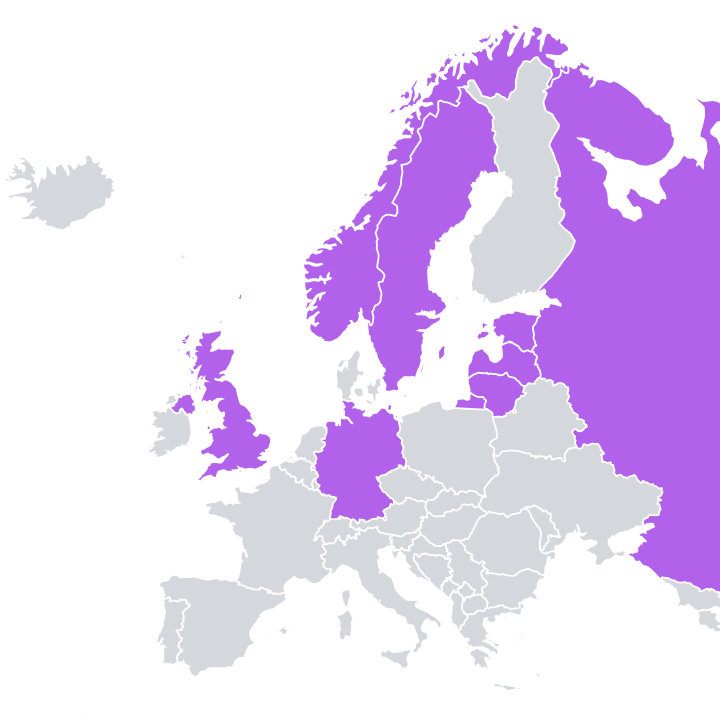
Bilateral ties are reinforced by institutional cooperation through the Nordic-Baltic Eight (NB8) format and, since 2024, by Sweden’s NATO membership. In June 2026, the Heads of Government of all eight Nordic-Baltic states, Denmark, Estonia, Finland, Iceland, Latvia, Lithuania, Norway, and Sweden, signed a Joint Statement in Tallinn committing to deepen cooperation across security, competitiveness, innovation, and digital infrastructure. The Joint Statement explicitly committed the signatories to “support regional competitiveness, innovation and industrial capacity through more integrated Nordic-Baltic markets and stronger cross-border value chains” and to “promote closer cooperation in regulation, innovation and investment, reduce fragmentation and help companies scale across the region.”6 These developments deepen the commercial integration from which cross-border disputes arise.
The Joint Statement’s ambition to integrate Nordic-Baltic capital markets, facilitate cross-border investment, and create a more connected digital area signals a next phase of regional economic integration. As the other regional reports in this series observe, the SCC Report on disputes involving Polish parties with respect to the Swedish-Polish Baltic Sea Pact signed in Gdynia on 29 June 2026, and the SCC Report on disputes involving DACH parties with respect to the German-Swedish Strategic Innovation Partnership, bilateral and multilateral agreements of this kind both reflect and accelerate the commercial activity from which cross-border disputes arise. For the Nordic-Baltic region, the trajectory is clear: deeper integration, broader commercial engagement, and a corresponding demand for neutral, efficient dispute resolution.
For parties in cross-border disputes of this kind, the need for a neutral, efficient forum outside either party’s domestic courts is a recurring consideration. Stockholm, situated at the geographic centre of the Nordic-Baltic region, has historically served that function.7
The SCC and neutral dispute resolution
A century of neutral dispute resolution
Founded over 100 years ago, the SCC is one of the world’s leading dispute resolution institutions. In 2025, the SCC registered 213 new cases, surpassing 200 cases in two consecutive years for the first time in its history, involving 568 parties from 50 different countries, the highest number of party nationalities ever recorded in a single year. Under the SCC Rules for Expedited Arbitrations, 94 per cent of cases were resolved within six months, with the average disputed amount reaching EUR 2.5 million. Parties from each of the three Baltic states appeared among the top 20 most represented nationalities in the SCC’s 2025 caseload, with Lithuanian parties the 16th most represented nationality. The Baltic caseload examined in this Report, 80 cases over the decade, with the annual volume more than doubling in the second half of the period, reflects this broader trajectory.
Neutrality of forum and governing law
For Baltic parties, the neutrality of the forum is a central consideration, but neutrality of forum does not require neutrality of governing law. The data in Section 4 reveals a striking pattern: Baltic home-country laws (Estonian, Latvian, and Lithuanian law combined) govern 50 per cent of all cases, compared with 21 per cent for Polish law in the SCC’s Polish caseload and just 5 per cent for German law in the DACH caseload. Baltic parties trust SCC procedure and a Stockholm seat while insisting on their own substantive law, a combination that presupposes confidence both in the institution and in the arbitrators’ ability to apply unfamiliar legal systems. As Audzevičius has observed, the SCC has historically served as a neutral platform for resolving disputes between parties from different legal and commercial traditions. He notes that the SCC Arbitration Institute was chosen by the US and the Soviet Union in the 1970s as a neutral forum, and that “today, the geopolitical shift is once again dividing the Eurasian continent into two camps, and I am sure that the importance of the [SCC Arbitration Institute] will only increase.”
The choice of Swedish law in 38 per cent of cases reinforces this institutional confidence. As Professor Christina Ramberg has observed:
Swedish contract law offers international commercial parties a combination of neutrality, accessibility, and commercial pragmatism. Its alignment with the UPICC means it reflects internationally recognised best practices in commercial contracting.
For Baltic parties, whose legal traditions share the civil-law heritage and whose commercial codes draw on similar continental sources, Swedish law offers a genuinely neutral middle ground that is nonetheless familiar in structure and methodology. The result is a caseload in which parties choose the SCC not despite the diversity of governing law but because the institution accommodates it.8
Baltic representation at the SCC
In January 2024, Ramūnas Audzevičius was appointed as a member of the SCC Board, the first member from the Baltic states in the institution’s history. As Audzevičius has noted:
The fact that a member from the Baltic States has joined the [SCC Arbitration Institute] demonstrates not only an appreciation of the experience and qualifications of a particular individual but also the weight and maturity of our market.
Carri Ginter, head of the Dispute Resolution & Risk Management practice at Sorainen and a member of the SCC Arbitrators’ Council, considers the increased importance of the SCC’s role in the region9:
The SCC Arbitration Institute will become even more significant as arbitration grows. Fifteen years ago, only a handful of people in the Baltic states were familiar with arbitration. Today, a new generation of young, motivated lawyers are eager to specialise in this field. As they gain experience, parties will begin to see SCC arbitration not as something foreign or complicated but as an extension of their legal environment, essentially, their backyard.
The data confirms Ginter’s observations. The SCC’s increasing engagement with the Baltic region is reflected not only in the parties initiating cases but also in the arbitrators who decide them. In the 2015–2019 period, no Baltic nationality appeared among the top 16 most represented arbitrator nationalities in SCC proceedings. In the 2020–2024 period, Estonian arbitrators entered the top 16 for the first time, ranking 13th with 6 appointments out of 436 individual arbitrators (1 per cent of the total). In 2025, Lithuanian arbitrators ranked 13th among 257 individual arbitrators appointed in SCC proceedings, with 3 appointments, and Latvian arbitrators also appeared, with 1 appointment. The trajectory is clear: as the Baltic caseload has grown, so too has the representation of Baltic-national arbitrators in SCC proceedings.
The Baltic states are among the SCC’s most engaged regional user communities. What is striking about the Baltic caseload is not only its growth but its sophistication. Parties are choosing the SCC across a wide range of sectors, governing laws and procedural formats, and doing so with a confidence in the institution that is reflected in the data. We are proud that the SCC is increasingly seen as a natural choice for dispute resolution in the Nordic-Baltic region.
The Baltics as an arbitration hub
Baltic parties are afforded a genuine choice of procedure: full arbitration under the Arbitration Rules, the SCC Rules for Expedited Arbitrations (“Expedited Rules”) for smaller or time-sensitive disputes, the appointment of an emergency arbitrator, SCC Express for an expedited assessment, and the SCC Mediation Rules. This range accommodates disputes spanning routine commercial disagreements to complex, high-value cross-border matters.
Ginter has also identified a distinctive opportunity for the Baltic region in the broader arbitration landscape10:
The Baltics have a unique opportunity, particularly when it comes to handling lower-value disputes from more expensive jurisdictions. I often hear colleagues from London complaining that it simply makes no sense to arbitrate a 200,000-pound claim. Pragmatically, parties may find it cost-effective to resolve their disputes here, benefiting from high-quality legal services at competitive rates. The SCC stands out for its innovative approach to dispute resolution, not only the ‘products’ they offer but also their technological advancements. The SCC platform is a good example of creating user-friendly access to case management.
The SCC has also taken steps to improve accessibility for Baltic users. Its model dispute resolution clauses are available in Estonian, Latvian, and Lithuanian, alongside English and more than 20 other languages.11 This enables Baltic parties to include SCC arbitration clauses in contracts drafted in their own language.
Dispute resolution in the Baltic states
Each of the three Baltic states presents a distinct dispute resolution market, but all three share a common trajectory: growing integration into international arbitration, with the SCC as the institution of choice for cross-border matters.
Lithuania
Lithuania is a UNCITRAL Model Law jurisdiction with arbitration-friendly courts and approximately 30 years of modern commercial arbitration history. The local Vilnius Court of Commercial Arbitration handles 30 to 40 cases per year, mainly domestic, but Lithuanian parties increasingly turn to the SCC for international disputes, 29 cases in the dataset, spread evenly across the period. As Audzevičius has explained:
A new generation arose and more and more arbitration clauses were agreed between commercial parties, especially in international contracts.
Key dispute-generating sectors include energy (the largest), construction, food and fertilisers, and commodity trading.
Estonia
Estonia has experienced what practitioners describe as an “arbitration boom,” with a growing number of specialists entering the market and a notable shift from court jurisdiction to arbitration in M&A, real estate, construction and transportation contracts. The shift is driven in part by the length of Estonian litigation (two to five years) and the Estonian Chamber of Commerce arbitration rules, which require resolution within six months. Estonia’s enforcement record is strong: no foreign arbitral award has ever been refused recognition or enforcement by an Estonian court, a critical factor for parties choosing the SCC with a Stockholm seat.
Estonian cases are increasingly referred to international institutions, including the SCC (30 cases in the dataset, concentrated in 2016 and 2020), as well as to arbitration in Helsinki, London, Paris, Zurich, and Vienna. Carri Ginter has described the Baltic arbitration market as “becoming increasingly professional and more cross-border,” noting “more opportunities to create dynamic legal teams from Estonia, Latvia, and Lithuania, working seamlessly in arbitration venues like Stockholm, London or even Dubai.”12
Latvia
Latvia’s arbitration landscape has undergone significant reform. The country previously had more than 200 arbitration institutions, a number that has since been reduced but remains above 50, still considered high relative to the size of the market. The UNCITRAL Model Law was not adopted during Latvia’s 2015 arbitration reform, and certain procedural limitations persist under the current law, including restrictions on the summoning of witnesses and on the availability of interim measures through state courts. A newly established Economic Affairs Court, operational since March 2021, is expected to support the development of domestic arbitration by providing judicial assistance functions.
Despite these challenges, international arbitration is increasingly attractive to Latvian companies, particularly for M&A transactions and large infrastructure and construction projects. Daiga Žīvtiņa, Partner and Head of the Dispute Resolution Practice at Ellex in Latvia and a former member of the SCC Arbitrators’ Council, has noted:
More and more companies are interested to solve their disputes in very fast, clear and cost-effective way in Latvia, and often they agree on arbitration
She highlights that arbitration is chosen particularly for transactions involving a foreign party, and for large projects “where specific knowledge is needed” and a “business-oriented approach prevails instead of a classical court approach.”
Over the past 15 years, more than 30 Latvian companies have chosen the SCC for arbitration.13 Asked what Latvian company lawyers appreciate about the SCC, Žīvtiņa has pointed to its reputation, clear vision and professionalism:
Latvian business people are familiar with the SCC Arbitration Institute and its reputation. Clear vision and professionality – these are very important factors for company lawyers to recommend the specific arbitration institution to the decision makers.
Common themes across the Baltic states
Across the Baltic states, confidentiality, neutrality, and expertise are consistently identified as the key factors driving the choice of arbitration. Audzevičius has identified confidentiality as “number one issue” for business decision-makers, alongside “neutrality and expertise and possibility to appoint your arbitrator.” His practical advice for drafting dispute resolution clauses involving Baltic parties is direct14:
Take a standard clause from a reputable institute, set a reputable seat, and that’s it. SCC clause, standard one, Sweden as a place, and you can never go wrong.
SCC Baltic Disputes: The Numbers, 2015–2025
Methodology
This Report defines a “Baltic case” broadly: any SCC case registered between 2015 and 2025 in which at least one party, claimant or respondent, was from Estonia, Latvia or Lithuania. Case type, industry, and outcome are immaterial to inclusion. This methodology identified 30 cases involving an Estonian party, 26 involving a Latvian party, and 29 involving a Lithuanian party. Four cases appear in multiple country datasets (involving parties from more than one Baltic state), yielding a total of 80 unique cases, which form the empirical basis for Section 4.
As with any live caseload, certain data fields are incomplete for a number of cases, most commonly where a case concluded before the parties quantified their claims, agreed a seat, or confirmed the governing law. Seven of the 80 cases have a recorded disputed value of zero or no recorded value, typically for this reason. These are excluded from the disputed-value calculations below but retained in all case-count figures.
Caseload by year
The 80 cases are distributed as follows: 2 in 2015, 9 in 2016, 6 in 2017, 4 in 2018, 3 in 2019, 13 in 2020, 7 in 2021, 5 in 2022, 10 in 2023, 16 in 2024, and 5 in 2025. The caseload more than doubled between the first half of the period (24 cases, 2015–2019) and the second (56 cases, 2020–2025), with 2024 registering the highest annual total at 16 cases. This growth rate outpaces the SCC’s broader caseload trend over the same period, confirming the Baltics as one of the fastest-growing regional sources of SCC cases. At the country level, Estonia’s caseload is concentrated in 2016 (6 cases) and 2020 (6 cases); Latvia’s surged in 2024 (11 cases), driven in part by a series of related fertiliser disputes; and Lithuania’s is spread more evenly across the period.
Counterparties
Baltic parties face counterparties from a wide range of jurisdictions in SCC proceedings. An analysis of the 80 cases in the dataset identifies counterparties from at least 21 non-Baltic nationalities, led by Finland (9 cases), Norway (7), Sweden (6), the United Kingdom (6), Denmark (5), Germany (5), and Poland (4), with Switzerland, Ireland, Cyprus, the Netherlands, Austria, Belgium, Brazil, Colombia, Jersey, Kazakhstan, Russia, Slovenia, Turkey, and the United States each appearing in one or two cases. Twenty of the 80 cases were purely domestic (both parties from the same Baltic state) or intra-Baltic (parties from different Baltic states), while the remaining 60 involved at least one non-Baltic counterparty.
This breadth of counterparty nationalities indicates that Baltic parties do not turn to the SCC solely on account of their trade ties with Sweden. Finnish, Norwegian, Danish, and British counterparties together account for a significant share of the caseload, reflecting the Baltic states’ extensive Nordic and European commercial relationships. The presence of counterparties from jurisdictions as varied as Brazil, Kazakhstan, and Colombia underscores the SCC’s role as a genuinely international forum for Baltic business, not merely a venue for Swedish-Baltic disputes.
Sector distribution
Energy leads the Baltic caseload at 24 per cent (19 cases), a higher concentration than in the SCC’s broader caseload (approximately 18 per cent), though less dominant than in the Polish caseload (44 per cent). Within the energy sector, electricity disputes account for 9 cases, gas for 6, and oil, nuclear and waste for the remainder. Construction and real estate follow at 22 per cent (18 cases), reflecting the significant infrastructure investment across the Baltic states. Retail and consumer products account for 19 per cent (15 cases), automotive for 9 per cent (7 cases), manufacturing for 8 per cent (6 cases), and financial services and life sciences for 5 per cent each (4 cases each), with technology, telecommunications, mining and other sectors comprising the remainder.
The energy sector’s prominence in the Baltic caseload is consistent with the region’s strategic energy profile. All three Baltic states have undergone significant energy transitions, including investments in LNG infrastructure, offshore wind, and cross-border electricity interconnectors. The construction sector’s strong showing reflects the region’s ongoing infrastructure development, including rail, roads, and commercial real estate, which generates a steady flow of cross-border disputes.15
Case type
The majority of cases (82 per cent) were ordinary arbitrations under the Arbitration Rules. Emergency arbitrator applications accounted for 10 per cent of the Baltic caseload (8 cases), consistent with the Polish caseload and above the DACH caseload, suggesting that Baltic-related disputes frequently involve time-sensitive commercial interests where interim relief is critical. Expedited arbitrations accounted for 5 per cent (4 cases). The remaining cases comprised a UNCITRAL arbitration and a mediation.
Applicable law and seat
Where a governing law was recorded, Swedish law was the single most common choice at 38 per cent of cases (27 cases), followed by Estonian law and Lithuanian law at 19 per cent each (14 cases each), Latvian law at 11 per cent (8 cases), Norwegian law at 4 per cent (3 cases), and English law and Russian law at 3 per cent each (2 cases each), with the CISG and German law each appearing once. Taken together, Baltic home-country laws (Estonian, Latvian and Lithuanian law combined) governed 50 per cent of all cases where a governing law was recorded, a strikingly high share of local law for an international institutional caseload, and substantially higher than in the SCC’s DACH caseload (where German law governs only 5 per cent).
Swedish law
Estonian law
Lithuanian law
Latvian law
Norwegian law
English law
Russian law
CISG
German law
38 %
19 %
19 %
11 %
4 %
3 %
3 %
1.5 %
1.5 %
Where a seat was recorded, Stockholm was the seat in 91 per cent of cases (68 cases), a higher concentration than in both the SCC’s Polish caseload (74 per cent) and its DACH caseload (78 per cent)16. Helsinki was the seat in 3 cases (4 per cent), Vilnius in 2 cases (3 per cent), and Berlin and Copenhagen each appeared once. The strong concentration in Stockholm confirms the city’s position as the natural seat for Baltic-related disputes.
Language of proceedings
English was the language of proceedings in 94 per cent of Baltic cases (75 cases), an even higher share than in the SCC’s Polish caseload (88 per cent). Swedish was the language of proceedings in 4 cases (5 per cent). Russian was the language in a single case (1 per cent). No proceedings were conducted in Estonian, Latvian or Lithuanian, consistent with English’s role as the dominant commercial and legal language across the Baltic states.
Disputed value
73 of 80 cases recorded an amount in dispute above zero, totalling approximately EUR 1.85 billion. This figure is substantially driven by a single exceptionally high-value Lithuanian energy case valued at approximately EUR 981 million. Excluding that case, the remaining 72 cases total approximately EUR 865 million, with a median of approximately EUR 2.83 million and an average of approximately EUR 12.0 million per case.
The distribution of disputed value varies across the three Baltic states. Lithuania accounts for the largest share at approximately EUR 1.32 billion (driven by the single outlier), followed by Latvia at approximately EUR 330 million and Estonia at approximately EUR 269 million. Excluding the single largest case, the Baltic caseload’s median value profile (EUR 2.83 million) positions it above the SCC’s Polish caseload (median EUR 1.13 million) and broadly in line with the DACH caseload (median EUR 2.26 million).
Duration
For the 61 cases with both a referral date and an award date on record, the average time from referral to award was 12.6 months, with a median of 10.0 months. These figures are broadly consistent with the SCC’s general caseload (approximately 12 months) and its DACH caseload (12.2 months average, 10.6 months median). 17 At the country level, Estonian cases were resolved fastest (average 10.3 months, median 9.0 months), followed by Latvian cases (average 13.2 months, median 14.4 months) and Lithuanian cases (average 15.8 months, median 12.1 months), the latter reflecting the complexity of several large energy disputes.
Regional comparison: DACH, Baltic, and Polish caseloads18
The Baltic caseload can be situated alongside two other regional caseloads examined by the SCC: the DACH region (Germany, Austria, and Switzerland) and Poland. A comparison across these three user communities reveals both shared patterns and instructive differences.
In terms of scale, the DACH caseload is the largest of the three, at 170 cases over the period 2015–2025, compared with 80 Baltic cases and 34 Polish cases. All three caseloads have grown, with registrations roughly doubling between the first and second halves of the decade. The Baltic caseload’s growth rate, from 24 cases (2015–2019) to 56 cases (2020–2025), is the steepest in proportional terms, confirming the Baltics as one of the SCC’s fastest-expanding regional sources of cases.
The median disputed value is broadly similar across the Baltic and DACH caseloads (EUR 2.83 million and EUR 2.26 million respectively), while the Polish caseload sits somewhat lower at EUR 1.13 million, consistent with a user community centred more on mid-market commercial disputes.
The choice of governing law differs markedly. Swedish law is the single most common choice across all three caseloads, but its share varies: 52 per cent in the DACH caseload, 38 per cent in the Baltic caseload, and 29 per cent in the Polish caseload. Conversely, the share of home-country law rises sharply: German law governs only 5 per cent of DACH cases, compared with 21 per cent for Polish law and a striking 50 per cent for Baltic home-country laws (Estonian, Latvian, and Lithuanian law combined). This is the highest home-country law share of any SCC regional caseload, suggesting that Baltic parties are particularly inclined to insist on their own substantive law while still selecting the SCC and a Stockholm seat, a combination that presupposes confidence in the institution’s ability to apply unfamiliar legal systems.
Stockholm’s dominance as the seat of arbitration is consistent across all three caseloads, though with notable variation: 91 per cent in Baltic cases, 78 per cent in DACH cases, and 74 per cent in Polish cases. The Baltic caseload’s 91 per cent concentration is the highest of any SCC regional caseload, confirming Stockholm’s position as the default seat for Baltic-related disputes. English is the near-universal language of proceedings in each caseload (94 per cent Baltic, 95 per cent DACH, 88 per cent Polish), though the Polish caseload is notable for including three cases conducted in Polish and the Baltic caseload includes occasional proceedings in Swedish and Russian.
The sector mix varies with each region’s economic profile. Energy leads the Polish caseload at 44 per cent and the Baltic caseload at 24 per cent, compared with 18 per cent for the DACH caseload, where retail and consumer products lead. Construction features prominently in the Baltic caseload (22 per cent) but not in the DACH or Polish figures, reflecting the Baltic states’ ongoing infrastructure development. The Baltic caseload is the most diversified of the three, with no single sector exceeding 25 per cent.
Duration is broadly comparable: Baltic cases average 12.6 months from referral to award, DACH cases 12.2 months, and Polish cases 9.9 months, the latter reflecting both lower average complexity and a high share of emergency arbitrator applications. The Baltic caseload’s median duration of 10.0 months is closely aligned with the DACH median of 10.6 months, suggesting that notwithstanding the diversity of governing law and the complexity of certain energy disputes, Baltic cases proceed at a pace consistent with the SCC’s broader institutional standard.
Conclusions and outlook
The key findings of this Report are as follows:
- Caseload growth: 80 unique cases involving a Baltic party were registered at the SCC between 2015 and 2025 (30 Estonian, 26 Latvian, 29 Lithuanian), with the annual volume more than doubling from 24 cases (2015–2019) to 56 cases (2020–2025). This growth rate positions the Baltics among the SCC’s fastest-expanding regional caseloads.
- Institutional confidence: Baltic parties use the full range of SCC procedures, ordinary arbitrations, expedited proceedings, emergency arbitrator applications, SCC Express and mediation, and choose seats outside Sweden (Tallinn, Riga, Helsinki, Copenhagen) in 9 per cent of cases, reflecting confidence in the SCC as an institution independent of Stockholm as a legal seat.
- Sector diversification: Energy leads at 24 per cent, followed by construction at 22 per cent and retail at 19 per cent, a more diversified sector mix than the SCC’s Polish caseload (where energy alone accounts for 44 per cent), reflecting the varied economic profiles of the three Baltic states.
- Home-country law at scale: Baltic home-country laws govern 50 per cent of all cases compared with 21 per cent (Polish law) and 5 per cent (German law) in the SCC’s Polish and DACH caseloads respectively. This is the highest home-country law share of any SCC regional caseload, suggesting that Baltic parties view SCC procedure and a Stockholm seat as fully compatible with their own substantive law.
- Stockholm as default seat: Stockholm was the seat in 91 per cent of cases, the highest concentration of any SCC regional caseload (compared with 74 per cent for Poland and 78 per cent for DACH), confirming Stockholm’s position as the natural seat for Baltic-related disputes.
Leading Baltic arbitration practitioners consistently identify the SCC as the preferred international arbitration institution in the region. As Audzevičius has declared:
SCC is the champion. I wouldn’t say there is a competitor to SCC in the Baltics.
These findings confirm the Baltic states as a distinctive and growing component of the SCC’s caseload. A comparison with the SCC’s DACH and Polish caseloads confirms shared patterns, the dominance of Stockholm as seat, the prevalence of English, and broadly comparable case durations while also revealing that the Baltic caseload is set apart by its combination of the highest seat concentration (91 per cent), the highest home-country law share (50 per cent), a diversified sector mix, a significant share of emergency arbitrator applications, and a growth trajectory that outpaces the SCC’s broader trend. For the SCC, the institutional implication is clear, the Baltics are not a peripheral market but a core constituency, and the appointment of Baltic practitioners to the SCC Board and Arbitrators’ Council reflects that shift.19
The broader trajectory is positive. All three Baltic economies continue to grow, their trade with Sweden deepens, and bilateral cooperation continues to expand. The June 2026 Nordic-Baltic Prime Ministers’ Joint Statement, signed in Tallinn by the Heads of Government of all eight Nordic-Baltic states, commits to more integrated markets, stronger cross-border value chains, and deeper cooperation on capital markets, digital infrastructure and innovation, an agenda that will further deepen the commercial integration from which cross-border disputes arise. The Baltic arbitration community is maturing, with a new generation of practitioners increasingly active in international proceedings. The SCC’s data suggests that as Baltic commercial activity scales, particularly in energy transition, infrastructure and cross-border M&A, the demand for neutral, efficient dispute resolution will grow correspondingly. As Carri Ginter has observed:
The future is incredibly exciting because we are at a pivotal moment. The Baltic states are no longer on the periphery of the arbitration world. We are becoming key players.
Notes
1 Jake is a dual-qualified lawyer (Australia & Sweden) and Specialist Counsel at the SCC.
2 Recorded seminar: “Mastering contract negotiations and dispute differences in Denmark, Germany, Norway, and Lithuania” (1 March 2024): https://sccarbitrationinstitute.se/en/news/recorded-seminar-mastering-contract-negotiations-and-dispute-differences-in-denmark-germany-norway-and-lithuania/
3 The SCC's annual statistics are available at: https://sccarbitrationinstitute.se/en/about-scc/scc-statistics/
4 Realtid, "Sverige störst i Baltikum": https://www.realtid.se/bors-finans/sverige-storst-i-baltikum/
5 Haldén (ed.), The Baltic Sea – A Geopolitical History, Bokförlaget Stolpe: https://www.fhs.se/en/swedish-defence-university/stories/2025-11-27-the-geopolitical-history-of-the-baltic-sea-in-a-new-light.html; Scandicorp, “Sweden as a Gateway to Nordic and Baltic Markets”: https://scandicorp.com/sweden-as-a-gateway-to-nordic-and-baltic-markets/
6 Joint statement of the Heads of Government of Denmark, Estonia, Finland, Iceland, Latvia, Lithuania, Norway and Sweden, Tallinn, 9 June 2026: https://www.government.se/statements/2026/07/joint-statement-of-the-nordic-baltic-prime-ministers/; see also Government Offices of Sweden, “Joint statement of the Republic of Poland and the Kingdom of Sweden on the Baltic Sea Pact” (29 June 2026): https://www.government.se/statements/2026/06/joint-statement-of-the-republic-of-poland-and-the-kingdom-of-sweden-on-the-baltic-sea-pact/; Government Offices of Sweden, "N5 and NB8 – Nordic and Nordic-Baltic cooperation on foreign and security policy": https://www.government.se/government-policy/n5-and-nb8--nordic-and-nordic-baltic-cooperation-on-foreign-and-security-policy/; FPRI, Kauliņš, “Sweden’s Role in Baltic Defense” (13 August 2025): https://www.fpri.org/article/2025/08/swedens-role-in-baltic-defense/
7 The SCC's annual statistics are available at: https://sccarbitrationinstitute.se/en/about-scc/scc-statistics/; Scandicorp, "Sweden as a Gateway to Nordic and Baltic Markets": https://scandicorp.com/sweden-as-a-gateway-to-nordic-and-baltic-markets/
8 SCC Arbitration Institute, "SCC Spotlight Talk: Christina Ramberg" (11 November 2025): https://sccarbitrationinstitute.se/en/news/scc-spotlight-talk-christina-ramberg/
9 SCC Arbitration Institute, “SCC Spotlight Talk: Carri Ginter” (24 March 2025): https://sccarbitrationinstitute.se/en/news/scc-spotlight-talk-carri-ginter/; Motieka & Audzevičius, “Appointed as a board member of the SCC Arbitration Institute” (2 January 2024): https://motieka.com/news/appointed-as-a-board-member-of-the-scc-arbitration-institute/
10 SCC Arbitration Institute, "SCC Spotlight Talk: Carri Ginter” (24 March 2025): https://sccarbitrationinstitute.se/en/news/scc-spotlight-talk-carri-ginter/
11 SCC Dispute Resolution Clauses, https://sccarbitrationinstitute.se/en/dispute-resolution-clauses/
12 SCC Arbitration Institute, “SCC Spotlight Talk: Carri Ginter” (24 March 2025): https://sccarbitrationinstitute.se/en/news/scc-spotlight-talk-carri-ginter/
13 SCC Arbitration Institute, "Dispute Resolution for Latvian Companies: Essential Insights for Navigating the Unwanted" (26 March 2025): https://sccarbitrationinstitute.se/en/events/dispute-resolution-for-latvian-companies-essential-insights-for-navigating-the-unwanted/.
14 Recorded seminar: "Mastering contract negotiations and dispute differences in Denmark, Germany, Norway, and Lithuania" (1 March 2024); SCC Arbitration Institute, "SCC Spotlight Talk: Carri Ginter" (24 March 2025).
15 Falconer, Lowther and Bodin, "The SCC Arbitration Institute – ISDS the Swedish Way', in Happ and Wilske (eds), ICSID Rules and Regulations 2022: Article-by-Article Commentary (2nd edn, C.H. Beck 2026).
16 See SCC Report: Disputes Involving DACH Parties in Cases Administered by the SCC (2015–2025); SCC Report: Disputes Involving Polish Parties in Cases Administered by the SCC (2015–2025).
17 See SCC Report: Disputes Involving DACH Parties in Cases Administered by the SCC (2015–2025); SCC Report: Disputes Involving Polish Parties in Cases Administered by the SCC (2015–2025).
18 SCC Report: Disputes Involving DACH Parties in Cases Administered by the SCC (2015–2025); SCC Report: Disputes Involving Polish Parties in Cases Administered by the SCC (2015–2025).
19 SCC Arbitration Institute, “SCC Spotlight Talk: Carri Ginter” (24 March 2025): https://sccarbitrationinstitute.se/en/news/scc-spotlight-talk-carri-ginter/